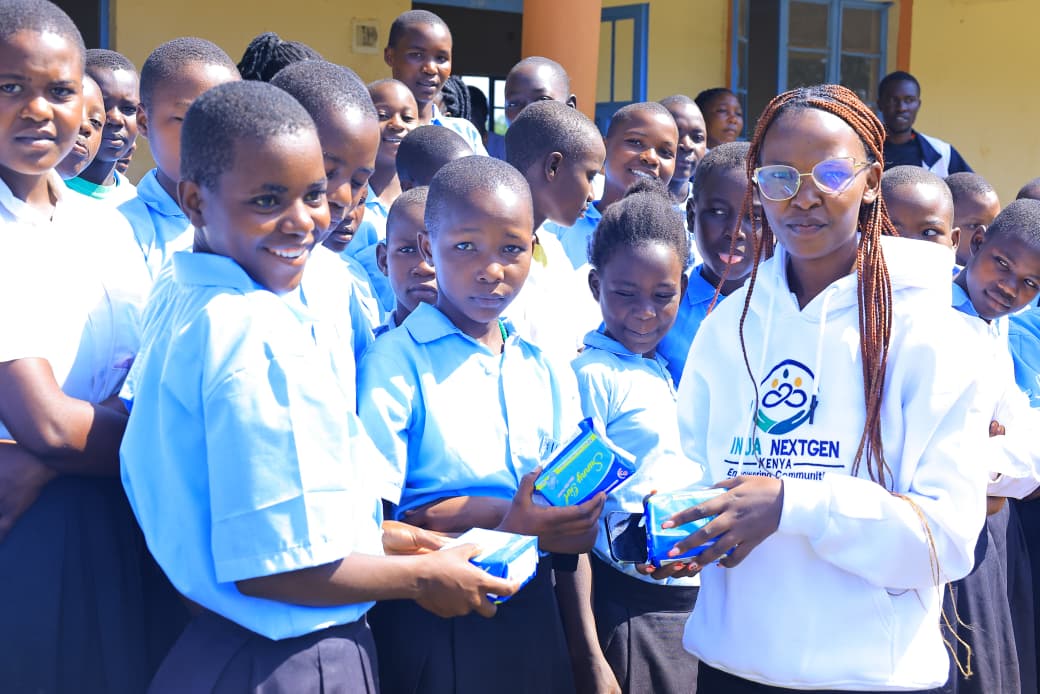
For many school-going girls in Nyamira County, period poverty in Kenya remains a daily barrier to education. The cost of sanitary pads, combined with stigma and limited menstrual health information, often forces girls to miss class or hold back during their cycles. To help change that, Inua NextGEN Kenya recently held a PAD Drive at Karantini Comprehensive School and Kenyamware Comprehensive School. The initiative reached adolescent girls with sanitary pads and menstrual health education, restoring dignity and supporting their continued participation in learning.
Why Period Poverty in Kenya Keeps Girls Out of School
Period poverty in Kenya is far more than an inconvenience; it is a documented threat to girls’ education. Research shows that roughly 65% of women and girls in Kenya cannot afford sanitary pads, while nearly one million school-age girls miss an average of four school days every month because of their periods.
As a result, missed lessons accumulate into lost confidence, lower grades, and, in the worst cases, dropping out altogether. Therefore, reliable access to menstrual products is not a luxury — it is a foundation for keeping girls in the classroom.
Inside the Inua NextGEN PAD Drive in Nyamira County
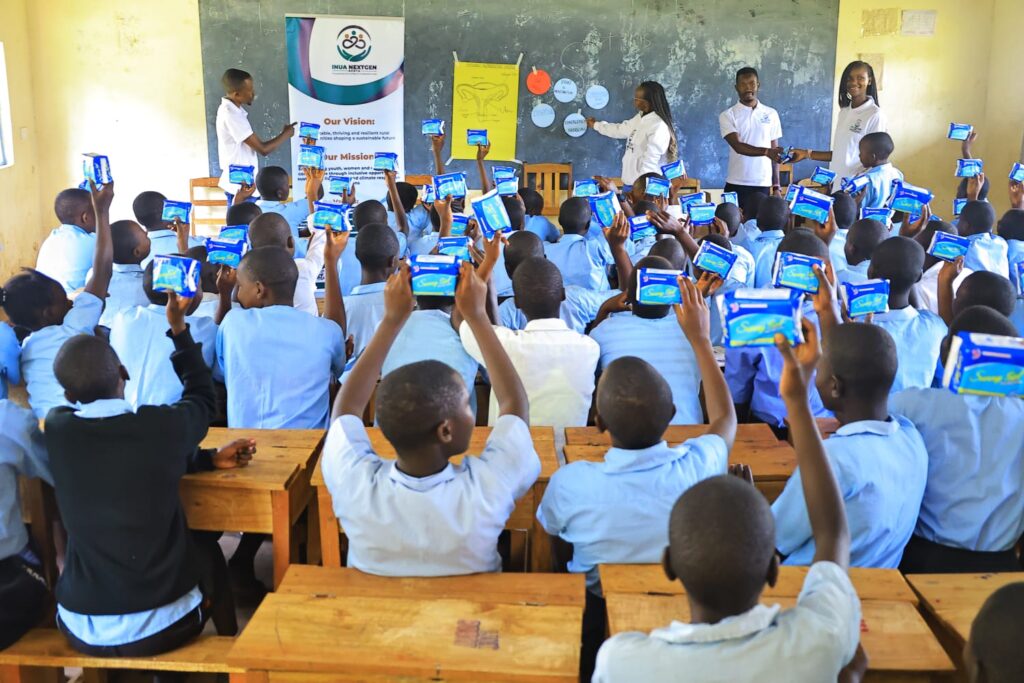
The PAD Drive was built to do more than hand out supplies. Instead, the Inua NextGEN team created a safe, supportive space where girls could ask questions, share experiences, and receive accurate information about hygiene and self-care.
During interactive sessions, the girls learned how to manage menstrual health, why consistent hygiene matters, and how to build confidence through adolescence. In addition, the team spoke with students, teachers, and school administrators to better understand the barriers girls face. Those conversations confirmed a recurring problem: access to sanitary products is inconsistent and unreliable.
Sanitary Pads and Menstrual Health Education for 167 Girls
In total, 167 Grade 8 and Grade 9 girls received sanitary pads, giving each of them at least one month of supplies. For many, this support arrives exactly when it is needed most.
Several students explained that they rarely know where their next pack of pads will come from. Consequently, drives like this one play a direct role in helping them stay in school and take part fully in classroom activities.
A Beneficiary’s Voice
For the girls themselves, the impact is deeply personal. Gracious, a Grade 9 student, shared her appreciation for the support:
“The pads will make us comfortable and build our confidence to attend school without worry.”
Her words capture the heart of menstrual health work. Beyond the products, these initiatives restore dignity, strengthen self-esteem, and create an environment where girls can truly thrive.
Restoring Dignity, One Girl at a Time
As Inua NextGEN continues empowering youth, women, and marginalized communities, menstrual health and dignity remain central to its mission. We believe every girl deserves the chance to learn, grow, and reach her full potential, free from the disadvantage that period poverty creates.
Through partnerships, community engagement, and the generosity of well-wishers, we hope to expand future PAD Drives and reach even more girls across rural Kenya.
How You Can Support Future PAD Drives
This initiative succeeded because people chose to act. We extend sincere gratitude to the school administrations, teachers, community members, and supporters who made it possible. Together, we are building a future where every girl can pursue her education with confidence, dignity, and hope.
If you would like to help more girls stay in school, consider supporting our next PAD Drive. Period poverty should never stand between a girl and her future.
Related Post
Reproductive Health and Rights in Kenya: A 2026 Guide
Reproductive health and rights in Kenya sit at the